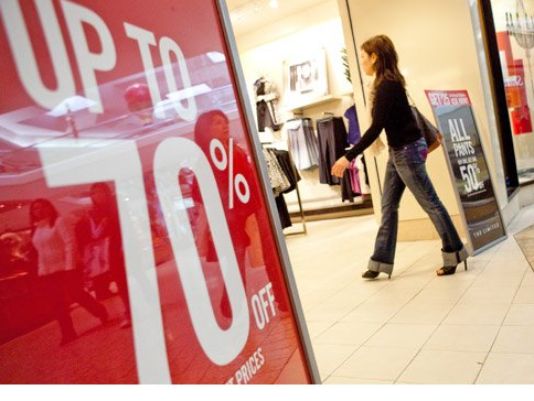
Memorial Day signals the start of summer – and an opportunity to score great savings on a variety of products. Big-ticket items, in particular, will be deeply discounted during sales over the long holiday weekend. In fact, some retailers already have launched their Memorial Day sales, so you can take advantage of deals now without interrupting your holiday plans. Here’s what you can expect to marked down now, through the weekend and into next week.
Apparel. The majority of Memorial Day deals will be on spring apparel, says Louis Ramirez, senior features writer for deal and coupon site DealNews.com. Expect to see discounts ranging from 40% to 90% from retailers such as 6pm.com, Eddie Bauer, H&M, Kohl’s, JCPenney, Macy’s and Old Navy. Designer brands such as Calvin Klein, Ralph Lauren and Steve Madden will mark down spring apparel by 30% to 75%, Ramirez says. Also look for coupons for an additional 15% to 40% off already discounted items. See Best Ways to Get Online Coupon Codes and 8 Great Coupon Apps for tips on finding coupons for online and in-store purchases.
You’ll also see discounts on summer clothing – just not as deep as the markdowns on spring apparel. Brent Shelton of cash-back shopping site FatWallet.com recommends shopping for discounted clothing before the long weekend to beat the crowds and ensure a better selection.
Appliances. This is one of the best times of the year to find deals on major appliances especially refrigerators. Consumers can expect discounts ranging from 10% to 65% at retailers such as AppliancesConnection.com, Best Buy, Home Depot, Lowe’s and Sears, says Howard Schaffer, vice president of deal site Offers.com. Also look for online coupon codes for additional savings, free shipping and 0% financing, he says. Most sales will start Friday and end Monday, but some will continue through next week.
Home goods and kitchenware. Department stores such as JCPenney and Kohl’s have marked down small kitchen appliances and bed and bath items 30% to 50%, and Macy’s has discounts of up to 60%.
Mattresses. Memorial Day sales represent the best time of year to buy mattresses, as mattress retailers offer discounts of 50% or more, Shelton says. Look for markdowns at department stores such as Macy’s and Sears, and at local retailers. For the past two years, Groupon has also taken up to 83% off a selection of mattresses as part of its Memorial Day sales, Ramirez says. You’ll also find that many stores will offer 0% financing until 2020 and free delivery, Schaffer says.
Outdoor items. The best time to find deep discounts on grills, patio furniture, mowers, lawn equipment and other outdoor items is at the end of summer. But if you want to enjoy them during the warm weather, you’ll find discounts of 20% to 50% during sales over the long holiday weekend, Schaffer says.
The Uber IPO is broken. On Friday, May 10, 2019, the stock opened at $42 per share, $3 below its offering price. A broken IPO is a stock that trades under its offering price shortly after going public. This drop in price seems to reflect Uber’s tumultuous existence with culture issues, scandals, infighting, and most recently a driver strike in protest of its IPO. Uber might not be ready to face the spotlight, and scrutiny, of being publicly traded.
Ten years ago, Uber set out to change the way we move, and to that end, it’s been successful. Uber’s technology simplified hailing a ride– instead of searching for money for an undetermined, and questionable, price– riders merely press a button on the app which provides all of those services in one.
Uber Technologies Inc. (NYSE: UBER) is the world’s biggest transportation network company operating on six (6) continents in over seven hundred cities.
Beyond Uber’s primary platform, it has two additional lines of business: Uber Eats, a meal delivery platform and Uber Freight, an on-demand marketplace connecting shippers and carriers.
Uber sought to raise $8.1 billion by offering its shares to the public at $45 per share. This price already was $2 under the midpoint of its proposed range of $44-$50. Although it initially seemed that Lyft’s recent IPO poor performance caused the price reduction, it appears that there might have undercurrents regarding Uber’s status. So what’s wrong with Uber?
The ride-hailing business isn’t profitable
Although TaaS provides riders with affordable and convenient transportation options, the business model might not be sustainable. Lyft and Uber, the world’s largest ride-hailing companies, have sustained massive operating losses throughout their history. Uber is the most unprofitable IPO; Lyft is the second. Uber’s prospectus reveals that it lost $4.08 billion and $3.03 billion for 2017 and 2018, respectively with an accumulated deficit of $7.9 billion. In addition to Uber’s consistent massive losses, revenue growth from its ridesharing operation has slowed dramatically. Growth decreased from 95% in 2017 to a mere 33% in 2018. Coupled with the ominous, “we may not achieve profitability,” things do not look bright for Uber.
Because drivers choose whether to provide services, use their own vehicle, and are free to work with Uber’s competition, Uber believes that drivers are independent contractors, not employees. However, the independent contractor classification is being challenged in the United States and internationally. In the U.S., over60,000 drivers have challenged this classification, Uber has reserved $132 million for litigation. Currently, these claims exceed the reserve, they are projected to settle anywhere between $146 million to $170 million. Uber has settled two consolidated class actions with California and Massachusetts drivers for $20 million. In Switzerland, several government agencies have classified drivers as employees for social security purposes; Uber is currently challenging this classification.
Reckless business practices
In its early years, one of the hallmarks of Uber was a rogue operation; in other words, operating without a license in jurisdictions where it was required. Uber is defending itself against taxi medallion ownersin Massachusetts alleging unfair competition violations in June.
In November 2017, Uber revealed it concealed a data breach of sensitive and personal information for over a year. Uber settled with the Attorney General for each of the 50 U.S. states and the District of Columbia for $148 million. Uber was also fined over $1.5 by European regulators concerning the breach. There are still pending regulatory matters which include litigation with the City of Chicago and approximately 14 individual and class action lawsuits.
There are significant differences between companies. First, when Amazon IPO’ed in 1997 it had been in business for approximately three years. In Amazon’s 10th year, it had profits of $476 million, a far cry from Uber’s $3.03 billion loss at the same point. Second, Amazon has also faced multiple economic headwinds and has managed to still come up on top. Uber, on the other hand, has been the beneficiary of ideal market after the 2008 recession. Uber has not generated a profit since its inception and has relied on $24.7 billion in funding from notable venture capital funds, such as SoftBank’s Vision Fund and Sequoia Capital. But that unchecked flow of cash that ended Friday, with their first public injection of funds.
The growth at all costs mantra has finally caught up to Uber.It now is accountable to a larger pool of investors. Uber must employ cost-cutting strategies, and revenue generation like its life depends on it, because, well it does.
Can it be fixed?
Shutterstock.com
The problems with the Uber IPO are indicative of the issues with the company overall. Uber still has opportunities. The company has dramatically improved its culture by changing its Executive team and Board of Directors. Uber’s current team has an average tenure of a little over a year, excluding Chief Technology Officer Thuan Pham.CEO Dara Khosrowshahi, the former CEO of Expedia, appears to be a breath of fresh air for the once chaotic startup.
Uber appears to have restored its autonomous vehicle technology program with the $1 billion partnership deal with SoftBank, Toyota, and DENSO. Investors should watch this deal closely because development could be limited by the terms and conditions of the Waymo Settlement.
Uber Freight provides an exciting path to profitability listed as “other bets” in its prospectus increasing 457% from 2017 to 2018. The quickest route to profitability might be using Uber’s technology to move things, not people.
Overall, investors should probably wait until at least the lock-up period is over in November before considering it as an investment. Even then, it is unclear if Uber will be a worthwhile investment. It’s a strong possibility that the early investors received all of its value, leaving very little for the average investor. For the average investor to get value, Uber must overperform. However, with profitability currently nonexistent, this is a large (almost impossible) task especially considering the significant drop in growth in its primary revenue driver.We are all watching to see if Uber will rise like a phoenix or sink like the Titanic.
We love Teachers! And despite their modest (and agreeably lower than they deserve) salaries, many Teachers still want cool stuff for their classroom, without going broke.
So, we found these cool Money Saving Tips for Teachers from WeAreTeachers.com.
Personal Finance Tips
1. Claim your educator tax deductions.
When you file your taxes this spring, don’t miss those educator tax deductions! There’s a $250 above-the-line deduction for classroom supplies (which means no need to itemize, holla!), as well as a tuition and professional development deduction if you’ve been continuing your own education. Sure, we wish it were larger, but don’t leave money on the tax table. Learn more here.
2. Track your expenses to reduce monthly bills.
“Get your finances under control by recording everything you spend. Get a spreadsheet going and take a few minutes a day to write things down and check your receipts. Once you’ve done that, you will know exactly what you’re spending your money on and where you can save so that you do not throw money away.” —Carolyn B., via WeAreTeachers Facebook
3. Build up an emergency fund.
“Every year, expect that unexpected expenses will come up, so you need an emergency fund. Set up an automatic transfer to savings of a little bit each paycheck, $100 or so, that you do not touch unless it’s really an emergency.” —Samantha C., via Facebook
4. Open a tax-sheltered annuity to increase retirement savings.
“A 403(b) tax-sheltered annuity will help you save more for retirement. I’m 20 years in, and I have saved more than $200,000 beyond my pension so far. Every little bit helps!” —AnnMarie D., via Facebook
CREDIT CARD TIPS
5. Choose credit cards wisely.
It is easy to slide into credit card pitfalls—the plastic is just so enticing. When deciding to open a new card, pay major attention to the interest rate. Make sure you are aware of whether it has a fixed rate or variable rate; typically fixed-rate cards are a more stable choice in the end, even if variables seem low at the start to reel you in. If the rewards are reeling you in, ruthlessly consider which rewards you will really use.
6. Pay off debt one account at a time.
If your credit card debt has piled up to more than you can easily pay each month, it is time to stop all credit card spending and start paying down the balances. Itemize your existing credit card debt and focus on one account at a time for the easiest strategy to reduce debt painlessly. In the meantime, use only your debit card. Here’s how to make it happen step-by-step.
CLASSROOM SUPPLY SAVINGS TIPS
7. Don’t be shy about mining your village.
Before you buy, always ask your colleagues and teacher friends if they have items you can have or borrow. Veteran teachers might be looking to downsize through donation. “Go ahead and ask your fellow teachers for unusual things. My co-workers are used to my emails asking for all sorts of crazy things for my class!” —Sharon Beth H., via Facebook
8. Ask parents to help with classroom supplies.
If you can, involve your students’ parents in supplementing classroom supplies before you supplement via your own wallet. At the beginning of the year when parents visit the classroom for open house and back-to-school nights, let them know which items you can use. And throughout the year, send home voluntary wish lists for items you’re low on in the classroom. You may be surprised by the level of parent participation when you make specific requests.
10. Ask local businesses for donations for the classroom.
You also can ask businesses and restaurants in your community to donate supplies for your classroom. They may have wholesale and bulk items they can spare, and they may appreciate the tax write-off. “Local businesses, restaurants and even fast-food places have donated to my classroom in the past. Parents are a great resource for locating those friendly businesses and pro-education business owners too.” —Gwen B., via Facebook
SHOPPING TIPS
11. Plan all meals.
That chai latte on the way to work, lunch take-out orders and restaurant visits add up … way up! One of the easiest ways to increase your cash flow is by planning and making all of your meals yourself. “Meal planning changed my life! I meal-plan every Sunday evening, and now I bring my lunch and snacks to school and keep all drinks in my room to stop vending machine spending. Planning like this keeps me out of the store too!” —Sarah I., via Facebook
12. Cut your grocery bill in half.
No, you don’t have to become consumed by coupons or set up a room in your house to store 3,000 bottles of Worcestershire sauce. But there are easy strategies for reducing your grocery bill. Use these tactics to plan your grocery spending with as much care as you plan your lessons.
Think beyond the craft-store bonus (besides, we’ve established that you’re cutting back on buying classroom extras, right?) and really pay attention to the discounts and rewards you can get when you shop through NEA Click and Save. NEA members can save big bucks every time you need new shoes, workout gear, toys, cosmetics, eyewear, event tickets and more!
Plus, make sure you check out this ginormous list of educator-only discounts on classroom supplies, books and magazines, electronics, entertainment, travel, and much more. You’ll be surprised by how many places will give you a discount just for being a teacher!
Finding a paid position for those two to three months of summer break can be an ideal way to get ahead of your finances and survive that summer paycheck. If you need a breather from the classroom, look beyond summer school for other places to land your perfect summer job.
16. Seek out tutoring opportunities.
After-school and weekend tutoring can be surprisingly profitable, whether through your district’s homebound student program or via private programs. Teachers all over the country report making anywhere between $20 and $100 per hour through various tutoring jobs. Check with your district and local tutoring companies, and post your services within your community.
17. Monetize your hobby.
Turn your passion into profit! If you’re already exercising your creativity, you might as well reap the possible financial rewards of a part-time business. If you’re an education blogger or classroom resource creator, sign up for Teachers Pay Teachers to offer your original lesson plans and craft guides for sale online. If you craft for pleasure, open an Etsy site to sell your art to others.
Managing money can feel like a tedious task. And for some, creating a budget could be very intimidating if never taught how to do it. In the age of modern technology, using a bank ledge seems like the ice age. So, since majority of the world lives on their smart phones (thanks to Social Media Apps like Facebook and Twitter), here are four mobile apps that can help you manage your money with ease.
BUDGETING
Mintis an awesome app that links all of your bank/credit union, investment, credit card, loan, etc. account into the app so you can see your entire financial picture. Mint allows you to categorize your transactions so you can see exactly how much you spend and on what; as well as helps you create budget based on your spending trends. Mint also has a bill payment feature to automate paying your bills and great information and tips on ways to save, invest and budget. Click here to learn more and get started.
INVESTING
Acornsis an investment app that allows people to get started investing with as low as $5. You can manually transfer money or have a recurring amount deposited into your Acorns account towards your personalized stock portfolio. The app can also automatically invest your spare change from debit or credit card purchases called “roundups.” Once the roundups reach $5, it withdraws the money and invests it in your personalized stock portfolio. Click here to learn more and get started.
CASH BACK SHOPPING
Ebatesis a free online Cash Back Shopping app with 2,000+ of the world’s top online stores that pays a bonus to attract new, valuable customers through app and website. Ebates sends “Big Fat Checks” to your mailbox, your PayPal account or your favorite charity. Ebates is a great app to get cash back shopping the way your normally do online through the app. Click here to learn more and get started.
SAVING
Digitis a cool app that automatically transfers cash from your checking account to a “rain day fund” savings account. This is a great app for people that find it a challenge to save money. Just connect your checking account to allow Digit to analyze your income and spending, and it finds money it can safely set aside for you. Every day, Digit analyzes if it can move some money from your checking account to your Digit savings account, without transferring more than you can afford. It also has a no-overdraft guarantee to ensure that you don’t overdraw your account because of the transfer. If necessary, you can transfer the money from your Digit savings account back to your checking account. Click here for more information and to get started.
UPDATE: Digit announced April 12, 2017 that was going to change to a fee based platform and only charge $2.99 per month. Thousands of people have saved so much cash and they live by this app.
(BONUS) Qapital is another great app that automatically transfers cash from your checking account to a “whatever you want to save for” account, but is a FREE alternative. Qapital also has a “round up” function that rounds up your purchases to the nearest dollar and automatically transfers the difference to the savings account. To ensure that transfers do not cause an overdraft to your checking account, Qapital pauses the transfers until you have at least $100 in your linked checking account. This is another app to help you save your spare change for a awesome Savings Goal, like Vacation.
These are just a few apps that I use to manage my money with ease that may help you as well. For more money lessons, click here to check out my free Madam Money Class.
While most people are justifiably upset over the most recent tax law changes under H.R.1, I’m reflecting on more advantageous tax bills of ages past. In 2001, Congress passed EGTRRA which created the Roth 401(k), the best thing to happen to retirement. Unfortunately, this gem is often overlooked by employees or hidden in a stack of new hire paperwork. To understand the magnitude of this account, let’s go through the evolution of the individual retirement accounts before it.
The 401(k) plan that Benna created is
now known as the traditional 401(k). Generally, the traditional 401(k) is what
we think about when we think of a 401(k).
The plan is characterized by an employee’s pre-tax contributions which
reduce her taxable income while simultaneously saving for retirement. As a bonus, the employer has an option to
make deductible matching and profit sharing contributions. Because the
contributions and earnings are not taxed until withdrawal, traditional 401(k)s
are also referred to as tax-deferred accounts.
Shutterstock
Unlike the 401(k), the Roth IRA was
created entirely by legislation and not by a creative interpretation of the tax
code. The Roth IRA was included in The
Taxpayer Relief Act of 1997 as “Nondeductible Tax Free Individual
Retirement Accounts” named for its sponsor Senator Bill Roth. Contributions were the opposite of the
traditional 401(k)—contributions were made after tax, so a taxpayer was not entitled
to a tax deduction, but are withdrawn tax-free. The downside of this account
was that contributions were limited to $2,000 and only those making less than
$100,000 were eligible to contribute. The contribution and income levels have
been increased to account for the cost of living.
Now
that we have a background on the individual retirement account, here are three
reasons why the Roth 401(k) is your retirement’s BFF.
Your Income doesn’t matter
Over 20 years later, the Roth IRA still has
significant income restrictions. For
single taxpayers, the income limit is $137,000.
Married taxpayers can make up to $203,000 before being wholly excluded. The Roth 401(k) is the option for those who
are excluded from Roth IRA contributions.
You can contribute three times as much.
In October or November, the IRS
releases the Cost of Living Adjustment (COLA) increases for retirement plans
for the next tax year. The contributions
for the 2019 contribution for IRAs (traditional and Roth combined) was raised
to $6,000 from $5,500 for the first time in five years. Taxpayers over the age
of 50 are eligible for an additional “catch up” of $1000.
Employees can contribute a maximum of
$19,000 to their 401(k) in 2019, up from $18,500 in 2018. If the employee is over the age of 50, they
are entitled to an additional $6,000 as a “catch up provision.”
In
plans with the Roth 401(k) option, an employee has the potential to contribute
significantly more pre-tax and after-tax money to their retirement.
Shutterstock
You have creditor protection
401(k)s are generally safe from creditors
because ERISA covers them. This
protection extends to 401(k) rollover. But 401(k)s are not protected from child
support and divorce obligations.
Not all employer plans have a Roth 401(k) option. In those instances, the Roth IRA is probably the best option for tax-free retirement savings. But if you make too much money to contribute, consider meeting with your tax professional and financial advisor to discuss a “backdoor Roth.”
By Tammy Greynolds, America Saves Communications Coordinator
America Saves Week (February 25 – March 2, 2019) is an annual opportunity for individuals to assess their savings and take financial action. America Saves’ mantra – and the focus for America Saves Week – is simple: Set a Goal. Make a Plan. Save Automatically. When you know what your current financial picture looks like, you can be more proactive in setting yourself up for future success.
Try these four simple steps during America Saves Week to help yourself save successfully:
Like your health, you should assess your savings annually to make sure you’re savings priorities are on the right track. Complete this simple 12 question assessment to find out your current standing and help you plan for the future.
Those with a savings plan are two times as likely to save for emergencies and retirement than those without one. Join the nearly 400,000 American Savers who have already committed to save. When you make the pledge, you can choose to receive text message tips and reminders to help you save towards your goals.
Are you on Twitter or Facebook? Join America Saves in encouraging your friends, family, and colleagues to save this week. Better yet, join one of the five – yes, five! – Twitter chats that America Saves will be a part of this week to get real-time savings tips and advice.
America Saves Week is coordinated by America Saves and the American Savings Education Council. Started in 2007, the Week is an annual opportunity for organizations to promote good savings behavior and a chance for individuals to assess their own saving status.
About Tarra Jackson
Tarra “Madam Money” Jackson is a financial educator, international speaker, author, and wealth empowerment strategist helping you heal, build, and grow your wealth.
We use cookies to ensure that we give you the best experience on our website. If you continue to use this site we will assume that you are happy with it.






You must be logged in to post a comment.