Category

Money Management

5 Easy Steps to Get Organized and Save Money

By Money Management 2 Comments
[us_separator type=”invisible” icon=”fas|star”]

By Kim McGrigg | Syndicated

Did you know that being organized saves you money?

  • organize billsYou waste money buying duplicates of items you didn’t know you had
  • You waste money on late charges because you can’t find the bills you need to pay, or you forget to pay them on time
  • You also waste money not deciding in the store where you should store the item you’re thinking of buying, and then not using it

So now that you know why you should get organized, let’s discuss some practical tips to show you how you can get your finances organized.

It’s a big myth that organizing is difficult and time-consuming.

Yes, you do have to take some time initially to set up your system but unless you want to make things really complicated, it’ll only take you about 15 to 30 minutes.


1. Put all bills to be paid in a specific folder

When you bring in the mail, throw away the junk mail and envelopes immediately and only keep the actual bill in a dedicated plastic see-through envelope in a specific place. Arrange the bills in order of when they have to be paid so that the one facing you is also the most urgent bill.

This way you and the rest of your family always know exactly where to find all the bills.

2. Automate as many bill payments as possible

We live very busy lives so if you don’t have to think about paying it, all the better for you. That said, schedule a day of the month to check your online payments against your actual budget.

3. Dedicate a specific day or days of the month to pay your bills.

Mark off a date on your calendar when you pay bills. If your bills are due on different days of the month, you may need more than one date.

Because life happens, schedule the date a couple of days before the payment is actually due so you don’t incur any late fees.

4. File

Once your bills are paid, file them in the way that’s easiest for you to manage. If you’re not a file puncher, don’t fool yourself that you will start punching and filing. The road to hell is paved with good intentions! 🙂

Rather use a filing system where you simply drop the paper in and it’s done.

5. Maintain

Restrict your filing space so that it forces you to clear out old bills every 6 – 12 months.

I actually only keep my own bills for 3 months because I have all my household categories in one file binder.

This easy-to-use system will take you only a minute or two a day, and about 30 minutes when you sit down and pay your bills.

If you need help getting to your financial freedom, check out 7 steps to your financial freedom now.


Kim McGrigg of Money Management, International compiled this helpful information from an interview with Marcia Francois. Marcia Francois is a time management and organizing coach who empowers small business owners and other busy professionals who want to make the most of their time. You’ll get simple, practical organizing and time management secrets to help you work less and enjoy life more! Visit her website at www.takechargesolutions.org.

BOSS Brunch Tour Promotes #WomensWealth in New York

By Events, Money Management No Comments
[us_separator type=”invisible” icon=”fas|star”]

The B.O.S.S. BRUNCH TOUR and is not your normal networking event. The B.O.S.S. Brunch brings a diverse audience of women together to connect, collaborate, educate and elevate one another while sharing Women’s Wealth Success Strategies for every aspect of their lives.

BOSS FLYER - New YorkThe B.O.S.S. BRUNCH is going to New York on Sunday, March 15, 2015, from 11am-2pm EST at Melba’s 125 at 163 West 125th Street, New York, NY. Tickets can be purchased at www.madammoney.com/BOSS-Brunch-Tour.

This event will include a delicious brunch at 11am and a Celebrity Expert Powerhouse Panel Discussion will follow. The Love & Money Edition discussion panel will feature Tiffany Aliche aka The Budgetnista, Tonya Rapley aka My Fab Finance, Zara Green – author of Loving in the GrownZone, Teresa Johnson of MommyCare Inc and Survivor, ShaChena Gibbs – the founder of Real Sisters Rising, and facilitated by Tarra Jackson aka Madam Money. The event will have some of the city’s most successful women business owners, entrepreneurs and professionals discussing the Power of Ownership, as well as Success Strategies on how to a B.O.S.S. with Love & Money in 2015.

The B.O.S.S. Brunch Tour is an opportunity for women to meet, mix, mingle, make strategic connections, ask questions, access helpful resources and above all enhance their Net Worth by increasing their Network! Each guest will receive a complimentary B.O.S.S. Gift Bag with gifts from event sponsors and vendors.

Sponsorship and Vendor opportunities are available at the following B.O.S.S. Brunch Tour locations: New York, NY (March 15, 2015), and Raleigh, NC (May 3, 2015).

Space is Limited.


About Madam Money

Tarra Jackson, known as Madam Money, is a seasoned personal finance expert with over 20 years’ experience in the personal finance sector as a corporate trainer, loan officer and executive at several major financial institutions. Tarra is the author of the best-selling book “Financial Fornication” as well as a nationally acclaimed speaker, commentator, consultant, author, and syndicated blogger. Tarra is the producer of #WomensWealth Google Hangout and host of one of the top five ranked personal finance Twitter Chats, called #CashChat Fridays at 12PM EST.

For inquiries regarding press, PR, event sponsorship, please email them to info@tarrajackson.com.

5 Tips on Merging Finances with Your Spouse

By Credit, Debt Management, Insurance, Investments, Money Management One Comment
[us_separator type=”invisible” icon=”fas|star”]

If you’re recently married, at some point you’ll be faced with a big decision: how to merge finances. (And if you’ve been married for a couple of years, but you’re finally deciding to merge finances with your spouse, this article is for you, too.) Sheiresa Ngo of Black Enterprise share five tips that will help you and your spouse work in perfect financial harmony.

black-couple-bills-review-620x480-300x232Have regular meetings. 

Don’t remain in the dark about your individual and household finances. Regularly meet to discuss savings goals, big purchases, and your overall progress. Write down your short-, mid-, and long-term financial goals. Make sure that you hold meetings at a time when you’re both relaxed and ready to talk.

Share your financial history. 

Be open about your financial track record. Share information such as any financial snags, your salary, where you currently bank, and how much you have in your bank accounts. Honesty is the best policy. Don’t lie about extra money or secretly open up a new bank account to hide money or large purchases you didn’t discuss as a couple. This is sure to cause strife between the two of you.

Draft a plan. 

Once you’ve had a few meetings and worked out the kinks, work on drafting a financial plan. This plan should include a household budget.

Agree on where you’ll bank. 

Take time to research the best banks for your needs. The bank where you currently do business might have worked for you individually, but (continue reading Merging Finances with Your Spouse by Sheiresa Ngo)


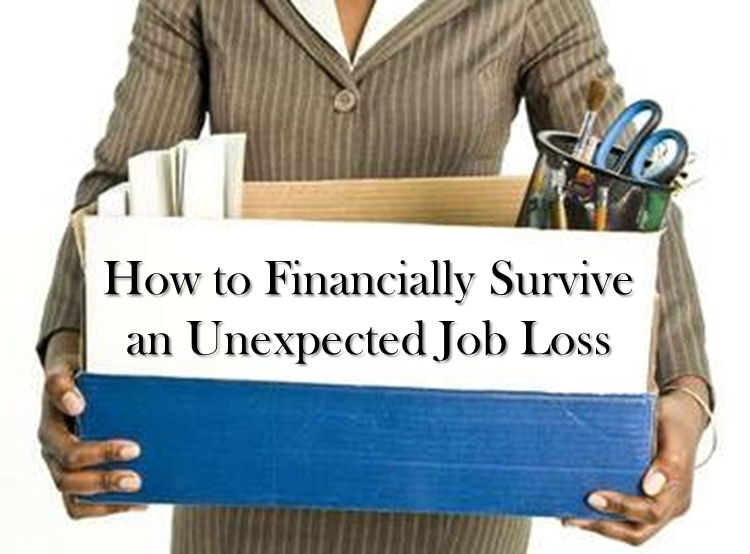
How to Financially Survive an Unexpected Job Loss

By Credit, Debt Management, Money Management No Comments

job lossTis the season for financial stress. Not only do many people deal with the stress of the financial burden that holiday shopping can create, the stress is magnified tremendously if there is an unexpected job loss. Here are some great tips from ModestMoney.com on how to financially survive an unexpected job loss.


Sometimes, months of layoff rumors precede a job loss. You hear whispers of cutbacks and people not getting their raises. Other offices start to close, and you’re pressured to work harder and cut costs.

At other times, a job loss happens with absolutely no warning. Your business closes, you get fired, or you become disabled and unable to work.

If you get fired or laid off, you might draw unemployment for a little while. Unfortunately, the bills won’t stop coming even when your money disappears. The last thing you want to do when the unexpected happens is to find yourself without a plan. Disaster-proof your finances now, before it’s too late.

DISABILITY INSURANCE

About 70 percent of people own life insurance policies, but only 40 percent invest in disability insurance. In reality, it’s probably more important to protect your current income before investing in life insurance. A 20-year-old today has a 30-percent chance of becoming disabled and missing at least six months of work before retirement. You might think you can fall back on government benefits for disability, but they vary widely depending on where you live. In the U.S., for example, people draw an average of just $1,188 for Social Security disability.

Disability insurance costs more than life insurance. The average private disability policy costs $18.60 per $1,000 of coverage versus 22 cents per $1,000 of coverage for life insurance. However, if you purchase disability insurance through your employer, you often get a cheaper policy. The average employer disability policy costs just $16.30 per $1,000.

Don’t worry about disability insurance if you make less than $30,000 per year or if you’re over 65. In these cases, you can get as much from public benefits as you will from your policy.

Also, if your injury results from an accident or workplace negligence, you can contact personal injury attorneys about getting a settlement. However, if you’re the family breadwinner, and you can’t live off of savings and investments if you can’t work, then you need disability insurance. Keep these tips in mind:

Pay your premium with after-tax money. When you pay disability insurance premiums with after-tax dollars, all disability benefits that you could receive become non-taxable. Even though your premiums would cost less if you paid for them with pre-tax income, you’d save a lot of money — if you actually became disabled — by making sure that you don’t owe taxes on the payouts you receive.

Expect only partial income replacement. Most disability payouts cover only 50 to 70 percent of your salary. Again, you can bridge the coverage gap by making sure that your payouts aren’t taxable. Pay your premiums with after-tax dollars.

Find ways to lower costs. You can pay lower premiums by accepting a lower percentage of your salary, such as 50 percent instead of 70 percent. Also, you can pay less by accepting a longer waiting period for payments to begin, such as accepting a 90-day waiting period instead of a 30-day waiting period.

SAVINGS

Traditionally, financial advisors have recommended having three to six months of income in your savings account. Unfortunately, the recession of 2007 changed a lot of the old rules. Today, 36.7 percent of people who don’t have jobs have been unemployed for more than six months. With such a tough job climate, boosting your savings rate becomes (continue reading IF YOU LOST YOUR JOB TOMORROW, WOULD YOU SURVIVE FINANCIALLY by ModestMoney.com)

Make Extra Money With These 4 Side Hustles

By Money Management No Comments

Need or want to make extra money? Side hustles can create additional streams on income to pay off debt or save more money faster. Courtney Connley of BlackEnterprise.com shares 4 unique side hustles that can bring in big bucks.[us_separator type=”short” icon=”fas|dollar-sign”]

Ever thought about what you can do to make additional money on the side? Wonder what others are doing to provide that extra financial cushion? From turning your hobbies into jobs and making an extra buck off your passions, below are four unique side hustles that can bring you a little more cash flow.

Vending Machine Investor: If you like selling snacks and other quick food items but don’t really care for customer interaction, then becoming a vending machine investor may be the perfect sides hustle for you. Depending on what items you sell, how much you charge and how much money you dish out for maintenance, the profit vending machine investors make can vary greatly. On average, a beverage machine can bring in more than $200 in one day alone (and snack machines more than double that). While the return for making quick money can be good, one must keep in mind the maintenance and upkeep required in terms of making sure the machine stays stocked and observing what products sell better than others.

Virtual Assistant: Thanks to the Web, many companies now seek out assistance from individuals who are miles away with a computer and who can help with data entry, writing, consulting bookkeeping and secretarial work. While the rates for this position range depending on where you work and how often, virtual assistants can make … (continue reading 4 Unique Side Hustles That Bring in Big Bucks)[us_separator type=”invisible” size=”small” icon=”fas|star”]