Category

Money Management

A Lack of Financial Knowledge Cost Americans $1,819 in 2022

By Money Management No Comments

That’s a lot of money to be giving up. 

Image source: Getty Images

It’s unfortunate that personal finance is a topic that’s generally not taught in school (though many lawmakers are fighting to change that, and 25 states have actually introduced legislation to include personal finance in school curriculum). What’s even more unfortunate is that a lack of personal finance knowledge can end up costing consumers money.

A recent survey by the National Financial Educators Council found that a lack of financial knowledge cost the average consumer $1,819 in 2022. That’s a terrible amount of money to lose at a time when living costs are so high.

If you feel you never got the financial education you deserve, it’s not too late to get schooled. There are loads of online resources you can tap to learn more about everything from budgeting to establishing a savings plan. But for now, here are three basic pieces of financial knowledge that might help your personal situation improve.

1. Savings accounts are a great place for emergency cash

This is actually going to be a two-in-one lesson. First, you should aim to have an emergency fund with enough cash to cover at least three full months of essential bills. Without one, you might quickly fall behind on your obligations or resort to debt in the event of a lost job. Or, you might rack up debt the moment you’re hit with an unplanned expense.

Meanwhile, the best place for your emergency fund is none other than a savings account. That way, your money is protected, and you can earn some interest on it while you’re not using it.

2. Credit card balances can be very costly

Many people don’t realize how expensive it can be to carry a credit card balance forward rather than pay one off in full every month. When you put money into a savings account, it gets to earn interest. That’s extra money you get to keep. When you carry a credit card balance, it accrues interest. That’s money you pay that your credit card company gets to keep.

Worse yet, many credit card companies compound interest on a daily basis. This means that for every single day you don’t pay your balance in full, it costs you even more. So if you’re going to use credit cards, do your best to pay their balances in full by the time they’re due.

3. It pays to invest money you don’t need for emergencies or near-term goals

Any money you have earmarked for emergencies or goals you want to achieve within the next five years should sit in a savings account. But for longer-term goals, investing in a brokerage account or IRA is probably a better bet.

You might earn twice the return on your money in one of these accounts. And while investing carries the risk of losing money that doesn’t come into play when you stick to a savings account, the financial upside tends to make it worthwhile.

How do you choose between a regular brokerage account and an IRA? Well, you’ll need to think about what you’re investing for, what tax benefits you’re looking for, and how much flexibility you want with your money. You can take a withdrawal from a regular brokerage account at any time without penalty, and you can invest any amount you want.

With an IRA, you’ll be subject to a contribution limit that changes every year, and you’ll be penalized for removing funds before reaching age 59 ½. That’s because an IRA is an account specifically designed to help you save for retirement, and the IRS doesn’t want you tapping that account prematurely. But in exchange for agreeing to those rules, you get a tax break on your money when you invest in an IRA.

With a traditional IRA, you don’t get taxed on your contributions. With a Roth IRA, you don’t get taxed on your withdrawals. So either way, you benefit financially.

Being in the dark about personal finance matters could cost you money. Do your best to address knowledge gaps so you don’t end up struggling financially.

Alert: highest cash back card we’ve seen now has 0% intro APR until 2024

If you’re using the wrong credit or debit card, it could be costing you serious money. Our expert loves this top pick, which features a 0% intro APR until 2024, an insane cash back rate of up to 5%, and all somehow for no annual fee.

In fact, this card is so good that our expert even uses it personally. Click here to read our full review for free and apply in just 2 minutes.

Read our free review

We’re firm believers in the Golden Rule, which is why editorial opinions are ours alone and have not been previously reviewed, approved, or endorsed by included advertisers.
The Ascent does not cover all offers on the market. Editorial content from The Ascent is separate from The Motley Fool editorial content and is created by a different analyst team.Maurie Backman has no position in any of the stocks mentioned. The Motley Fool has no position in any of the stocks mentioned. The Motley Fool has a disclosure policy.

 Read More 

Almost 1 in 5 Young Adults Has Debt in Collections. Here’s Why That’s a Huge Problem

By Money Management No Comments

Once your debt goes into collections, it opens up a world of consequences. 

Image source: Getty Images

There are plenty of reasons why people land in debt. Sometimes, it’s due to unplanned bills — and not having enough money in a savings account to cover them. Other times, it’s due to financial peer pressure, like during the holidays or when you’re invited to participate in multiple weddings within the same year.

But it’s not just major expenses that have the potential to create a personal debt crisis. Sometimes, a gradual but notable increase in living costs could be enough to drive up your credit card balances. Such was no doubt the case for a lot of people in 2022, when rampant inflation forced a lot of people into debt despite spending cutbacks.

Debt has the potential to impact consumers of all ages. But recent data from the Urban Institute found that almost 20% of young adults aged 18 to 24 have debt that’s reached the point of landing in collections. And that’s a major problem on multiple levels.

Collections can be stressful

When a debt reaches the point of being handed over to a collections agency, it means the original creditor has tried to collect on an overdue debt and failed. And so they’ve turned the debt over to an agency whose job is solely to focus on recouping overdue debts.

But that can be stressful to experience as a consumer. Debt collectors can call at inconvenient times and use strong language to try to scare you into paying. And while there are specific actions debt collectors cannot take, like use foul or harassing language and call you at unreasonable hours, they are allowed to be persistent in their efforts to get the money they’re after. That has the potential to be a very aggravating experience for you — especially if you know you’re unable to pay.

Major credit score damage can ensue

If your debt has reached a point where it’s been turned over to a collections agency, it means you’re pretty far behind on it. And that alone could cause extensive damage to your credit score, making it difficult to borrow money in a pinch when you need to.

Credit score damage due to falling behind on debts could be especially problematic for younger consumers. Why so? Younger consumers generally don’t have as lengthy a credit history as older ones. That alone puts them at a disadvantage when it comes to having strong credit. To then take a hit on top of that could mean spending years struggling to not just borrow money, but do other things that hinge on having a good credit score, like renting an apartment.

What to do if you can’t pay your debts

If you know you can’t pay a given debt, or pay it in full, don’t just ignore the problem and hope it will go away. Instead, reach out to the entity you owe money to, explain your situation, and see what concessions they’re willing to make.

If, for example, you owe $1,500 on a medical bill, your provider might be willing to break that down into a 15-month payment plan for you. And as long as you pay your $100 bill every month, it might agree to not report you as delinquent to any of the credit bureaus or turn your unpaid bills over to a collections agency.

If you’re deep in debt beyond that point, you may want to contact a debt settlement attorney or service and see what options you have. These professionals or firms may be able to negotiate on your behalf so you’re able to stop getting those constant calls asking you to pay, and so you can begin to more easily work your way out of that hole and bring your credit score back up.

Alert: highest cash back card we’ve seen now has 0% intro APR until 2024

If you’re using the wrong credit or debit card, it could be costing you serious money. Our expert loves this top pick, which features a 0% intro APR until 2024, an insane cash back rate of up to 5%, and all somehow for no annual fee.

In fact, this card is so good that our expert even uses it personally. Click here to read our full review for free and apply in just 2 minutes.

Read our free review

We’re firm believers in the Golden Rule, which is why editorial opinions are ours alone and have not been previously reviewed, approved, or endorsed by included advertisers.
The Ascent does not cover all offers on the market. Editorial content from The Ascent is separate from The Motley Fool editorial content and is created by a different analyst team.The Motley Fool has a disclosure policy.

 Read More 

Think Your Home Is Your Greatest Investment? Here’s Why You’re Wrong

By Money Management No Comments

You shouldn’t be in it just to make money. 

Image source: Getty Images

You’ll often hear that it pays to own a home rather than rent one. The reason? There are financial benefits available to homeowners that renters aren’t privy to.

As a homeowner, you can claim a tax deduction for the interest you pay on your mortgage. You can also deduct your property taxes (though there are limits on state and local tax deductions, which property taxes fall under).

Plus, when you own a home, your property might gain a lot of value over time. And if it does, and you decide to sell it, you could walk away with a nice profit. In fact, you’ll often hear that your home is your greatest investment. But here’s why you shouldn’t buy into that line of thinking.

It’s a roof over your head more so than anything else

You might make money on the sale of your home eventually, but your home’s main purpose isn’t to make you money. Rather, it’s to provide you with a place to live. And if you take too much of an investment-minded approach to buying a home, you might end up buying a home you regret.

Let’s say you really want a home in a certain neighborhood, but you choose a different neighborhood because you think it will lend to better resale value down the line. You might make more money when you sell your home, but will you have given up years in your preferred neighborhood? Yes. And that’s a sacrifice that may not be worth making.

Similarly, you may be motivated to improve your home so it ends up with a higher resale value. But you could end up spending money on things that don’t really enhance your quality of life, like high-end countertops you don’t care about having. Is that really worth it?

Keep your investments separate

The stocks in your brokerage account are an investment. But you shouldn’t look at your home the same way.

The point of buying stocks is to make money. But the point of buying a home is to have a place to live. It’s important to make that distinction.

Here’s another way to think about it: In the course of owning your home, you might have to spend many thousands of dollars on repairs. But when’s the last time you had to spend $5,000 to keep owning a stock that was already in your portfolio?

Investing your money for financial gain is not a bad thing to do. Quite the contrary — you should absolutely do what you can to put your money to work.

But when it comes to buying a home, it’s really best not to focus on the investment angle. Instead, focus on the things you want in a home and neighborhood, and put your own comfort and happiness ahead of the idea of financial gain.

You can buy assets for the express purpose of making money. Your home should be your haven, and you shouldn’t worry about what it will be worth in 10, 20, or 30 years from now.

Our picks for the best credit cards

Our experts vetted the most popular offers to land on the select picks that are worthy of a spot in your wallet. These best-in-class cards pack in rich perks, such as big sign-up bonuses, long 0% intro APR offers, and robust rewards. Get started today with our recommended credit cards.

We’re firm believers in the Golden Rule, which is why editorial opinions are ours alone and have not been previously reviewed, approved, or endorsed by included advertisers.
The Ascent does not cover all offers on the market. Editorial content from The Ascent is separate from The Motley Fool editorial content and is created by a different analyst team.The Motley Fool has a disclosure policy.

 Read More 

Mark Cuban Says This Could Cause the Next Crypto Implosion

By Money Management No Comments

The Dallas Mavericks owner is suspicious about some cryptocurrencies’ trading volumes. 

Image source: Getty Images

Cryptocurrency was plagued by some high-profile collapses in 2022. One of the largest cryptocurrencies, Terra (LUNA) crashed in May. And one of the largest crypto exchanges, FTX, filed for bankruptcy in November. Founder Sam Bankman-Fried has been charged with fraud and money laundering.

The hope for crypto investors is that there aren’t any incidents like these in 2023. But billionaire Mark Cuban, a longtime crypto investor himself, thinks another could be on the horizon. He believes the next possible crypto implosion “is the discovery and removal of wash trades on central exchanges,” he said in an interview with TheStreet.

Cuban clarified that he doesn’t have specifics to support his guess. However, there’s evidence this is a serious issue. If you invest in cryptocurrency, it’s important to be aware of what’s going on and what to look out for.

What is wash trading?

Wash trading is an illegal activity that involves a single person buying and selling the same asset to manipulate the market. In doing so, the owner of an asset can pump up its trading volume and mislead potential investors. It was originally used with the stock market, but it can also be used to manipulate other markets, like cryptocurrency.

For an example of how this works, let’s say you own $1 million worth of a crypto token. You sell it to another crypto wallet in your control. You still have the same amount of cryptocurrency, minus transaction fees. And your transaction added $1 million in artificial trading volume.

Fraudsters often use wash trades as part of pump-and-dump cryptocurrency scams. They’ll buy and sell their own tokens to give the appearance that a cryptocurrency is heavily traded. Then, they’ll promote the cryptocurrency on social media. Once they’ve convinced people to invest and driven up the price, they sell their tokens at a profit. The price then plummets, and all those new investors end up losing money.

Crypto likely has a wash trading problem

Because of how cryptocurrency works, the market is especially vulnerable to wash trading. Crypto wallets aren’t tied to the owner’s identity. Some crypto exchanges let you trade by connecting a wallet, with no identity verification required. That makes it very easy for a scammer to set up multiple wallets and move their own cryptocurrency back and forth.

Non-fungible tokens (NFTs) have this same problem. If you own an NFT, and you want to make it seem more valuable, you can just buy it yourself for a hefty price.

Recent data supports Mark Cuban’s theory about crypto wash trading. In August 2022, Forbes released an analysis of trading activity at 157 crypto exchanges. It found that “more than half of all reported trading volume is likely to be fake or non-economic.” It estimated that global Bitcoin (BTC) trading volume was less than half of what was being reported.

How to protect yourself while investing in cryptocurrency

Cryptocurrency investing is inherently risky business, so there’s no way to be completely safe. And if there’s a discovery of widespread wash trading on major exchanges, Cuban is right that it could lead to another crypto implosion.

Take all crypto trading volume with a grain of salt, and don’t use it as a reason to invest. This is especially true if you’re thinking of investing in smaller cryptocurrencies, but it can be the case with larger coins as well. Base your investing decisions on the quality of the cryptocurrency, not how much of it is supposedly being traded.

Also, be conservative about how much money you have in crypto. There’s nothing wrong with making cryptocurrency a small part of your investment portfolio. If you want to put 5% of your money in crypto, that’s fine. Just don’t invest money you can’t afford to lose, and keep the bulk of your portfolio in less volatile investments, such as stocks.

Our picks for the best credit cards

Our experts vetted the most popular offers to land on the select picks that are worthy of a spot in your wallet. These best-in-class cards pack in rich perks, such as big sign-up bonuses, long 0% intro APR offers, and robust rewards. Get started today with our recommended credit cards.

We’re firm believers in the Golden Rule, which is why editorial opinions are ours alone and have not been previously reviewed, approved, or endorsed by included advertisers.
The Ascent does not cover all offers on the market. Editorial content from The Ascent is separate from The Motley Fool editorial content and is created by a different analyst team.Lyle Daly has positions in Bitcoin. The Motley Fool has positions in and recommends Bitcoin. The Motley Fool has a disclosure policy.

 Read More 

Almost 6 in 10 Workers Say Their Paychecks Can’t Cover Their Living Costs

By Money Management No Comments

Talk about a troubling situation. 

Image source: Getty Images

For months on end, consumers have been getting battered by high inflation. In fact, since the start of 2022, many people have been forced to raid their savings or carry credit card balances just to do basic things like keep the lights on and put food on the table.

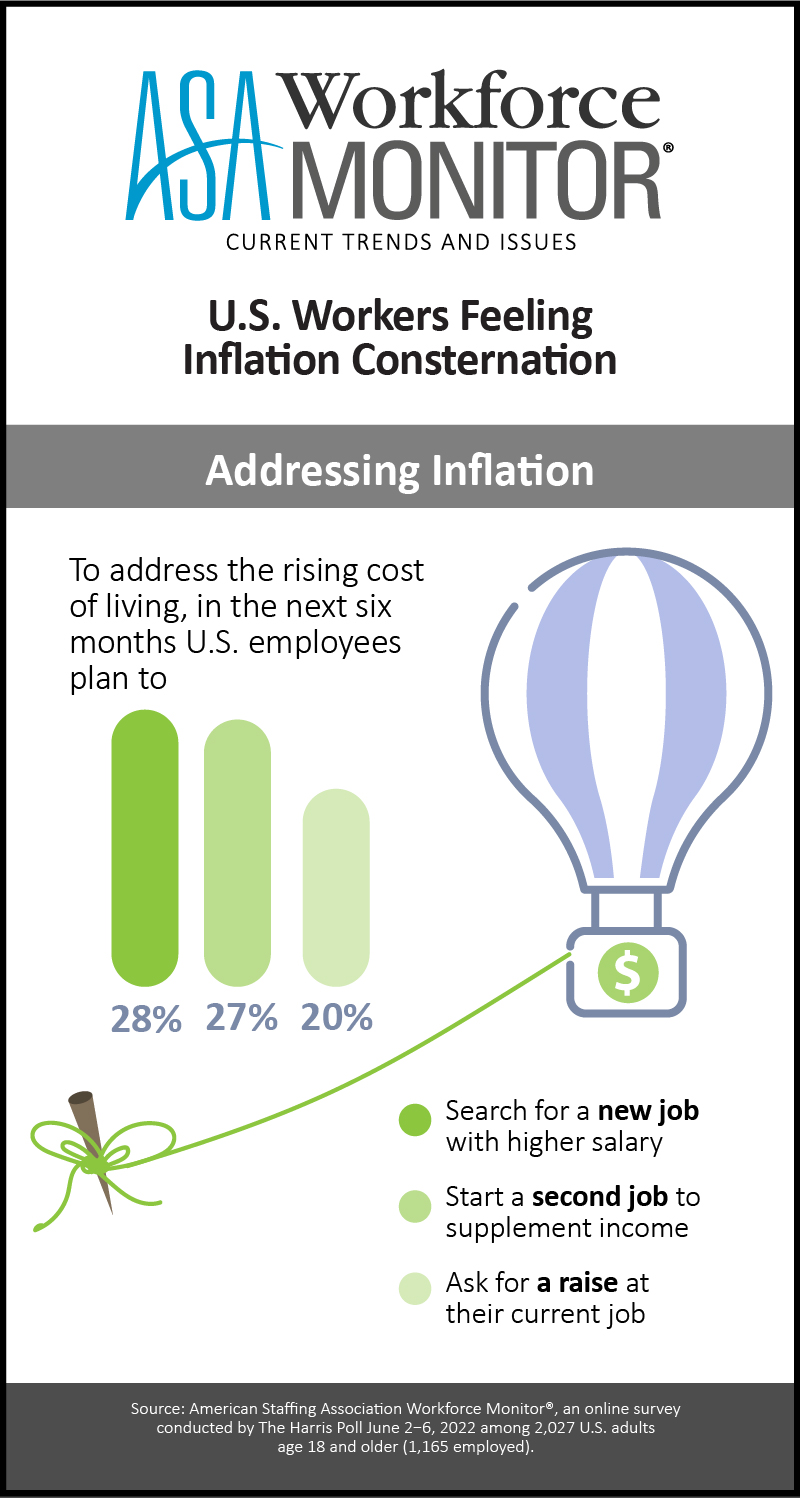
It’s not surprising, then, to learn that almost 60% of workers today are concerned that their paychecks can’t support them during this period of rampant inflation, as per the American Staffing Association. But while that may not be surprising, it’s problematic. And if you’re in a place where your paycheck can no longer cut it, here are some options worth looking at.

1. Fight for a raise

Many employers gave out fairly generous raises at the start of 2023 to account for higher living costs. If yours didn’t, you may need to take matters into your own hands and fight for a raise not just based on inflation, but also your own performance.

Think about the different ways you’ve added value to your company over the past year — or, better yet, saved your company money. Make a list and then schedule a meeting with your manager to discuss it. If you can prove that you’re worthy of higher pay, you could see your salary rise, making it easier to keep up with your bills.

2. Pursue a new job

Sometimes, jumping ship and working for a new employer is the best way to score a boost in pay. If your company won’t increase your wages, don’t hesitate to look for a job elsewhere.

Despite recession warnings, the job market is still pretty hot. So it’s a good time to dust off your resume and start reaching out to your network of professional contacts and asking for help in finding a new role.

3. Pick up a side hustle

Leaving a job is easier said than done. It could mean having to relocate, dealing with a change in schedule, or having to worry about losing out on certain benefits, like health insurance.

If you don’t want to leave your job but your company refuses to increase your pay, consider padding your income with a side hustle. Just as there are plenty of full-time jobs to be found these days, there are tons of options available right now in the gig economy. And you never know when a given side hustle might end up being more lucrative than expected.

In other words, if you take on a side gig, you might do more than just keep up with inflation. You might earn enough to meet other financial goals and have more opportunities to pay for fun things, like vacations.

It’s not at all shocking to learn that employee paychecks aren’t going as far as they once did. But rather than resign yourself to ongoing financial struggles, do what you can to boost your pay — whether by advocating for a raise, searching for a new job, or supplementing your income with a side gig.

Alert: highest cash back card we’ve seen now has 0% intro APR until 2024

If you’re using the wrong credit or debit card, it could be costing you serious money. Our expert loves this top pick, which features a 0% intro APR until 2024, an insane cash back rate of up to 5%, and all somehow for no annual fee.

In fact, this card is so good that our expert even uses it personally. Click here to read our full review for free and apply in just 2 minutes.

Read our free review

We’re firm believers in the Golden Rule, which is why editorial opinions are ours alone and have not been previously reviewed, approved, or endorsed by included advertisers.
The Ascent does not cover all offers on the market. Editorial content from The Ascent is separate from The Motley Fool editorial content and is created by a different analyst team.The Motley Fool has a disclosure policy.

 Read More 

This Lesser-Known Amazon Section Is Loaded With Deals

By Money Management No Comments

Have you gotten a chance to check it out yet? 

Image source: Getty Images

When the cost of an Amazon Prime membership rose from $119 to $139 last year, some consumers made the decision to cancel that service due to the higher price tag. But for those who rely on Amazon for regular purchases, the decision to hang onto Prime was probably a no-brainer.

But while there are certain benefits associated with having a Prime membership, like free two-day shipping on any Prime-eligible purchase, the reality is that you can still enjoy a world of savings on Amazon without signing up for Prime. For one thing, it’s more than possible to score free shipping on your purchases without a Prime membership. All you need to do is buy $25 or more of items.

Meanwhile, Amazon has a lesser-known section on its site that’s perpetually loaded with deals. And you can shop there as often as you want — even if you aren’t paying for Prime.

Do you know about Amazon Outlet?

Clearly, a lot of people are familiar with Amazon as an online retail giant. But many people don’t realize that Amazon has a dedicated section where you can shop for overstocked items and score your share of bargains.

It’s called Amazon Outlet, and there, you might find everything from household goods to apparel to non-perishable grocery items and snacks. Best of all, once you enter Amazon Outlet, you can use the search bar on top to look for specific items you might need. You don’t have to spend an excessive amount of time scrolling through the site and seeing what’s in stock.

That said, if you have some downtime, it could pay for you to familiarize yourself with the items Amazon Outlet carries. That way, if a future need for something arises, you may be more inclined to look there.

Don’t get carried away

Shopping on Amazon Outlet could be a true money-saver. But as is the case with any sort of discount site or store, it’s important to not go overboard with your purchases.

It’s one thing to load up on your child’s favorite snacks at a discounted price, or to rack up a smaller credit card tab in the course of buying some household essentials, like cleaning products and food storage containers. But don’t embark on a full-blown Amazon Outlet shopping spree just because that section of the site is filled with deals. Instead, make a list of the things you want and need, and set priorities so you know where to spend your money.

Remember, Amazon Outlet isn’t a seasonal thing — it’s a permanent fixture on the site. Granted, its inventory can change throughout the year, but the point is that you shouldn’t feel pressured to make purchases you can’t easily afford just because you’re tempted to snag a bargain and you’re worried that waiting will cause you to lose out.

Overspending on Amazon is never a good thing, even if you’re buying discounted items. And if you get into that habit, you could end up with a serious pile of debt on your hands.

Alert: highest cash back card we’ve seen now has 0% intro APR until 2024

If you’re using the wrong credit or debit card, it could be costing you serious money. Our expert loves this top pick, which features a 0% intro APR until 2024, an insane cash back rate of up to 5%, and all somehow for no annual fee.

In fact, this card is so good that our expert even uses it personally. Click here to read our full review for free and apply in just 2 minutes.

Read our free review

We’re firm believers in the Golden Rule, which is why editorial opinions are ours alone and have not been previously reviewed, approved, or endorsed by included advertisers.
The Ascent does not cover all offers on the market. Editorial content from The Ascent is separate from The Motley Fool editorial content and is created by a different analyst team.John Mackey, former CEO of Whole Foods Market, an Amazon subsidiary, is a member of The Motley Fool’s board of directors. Maurie Backman has positions in Amazon.com. The Motley Fool has positions in and recommends Amazon.com. The Motley Fool has a disclosure policy.

 Read More